
Technology
The Ultimate Guide to Portable Power Chargers: Keeping Your Devices Charged On the Go

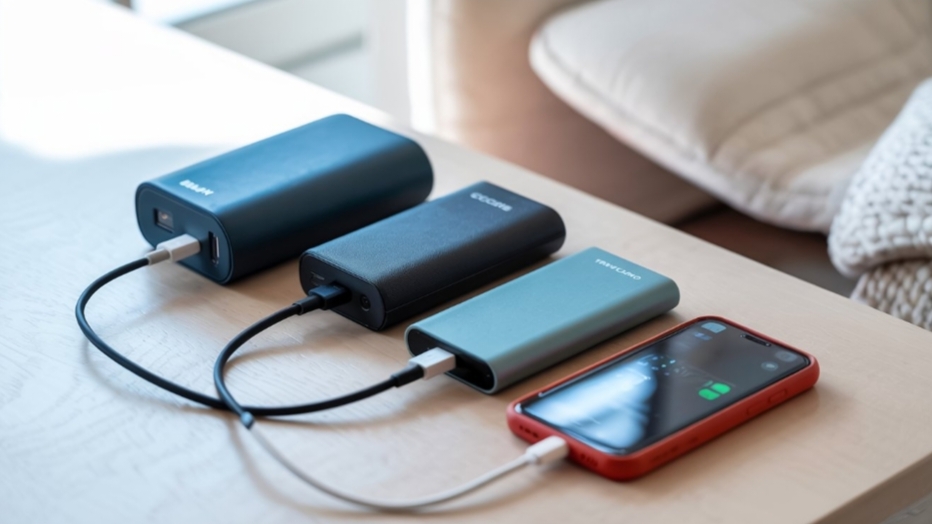
Like most things today, when it comes to technology and electronics, portable phone chargers have become a necessity. To fully utilize the capabilities of your smartphone, having an on-the-go portable phone charger is important. After a decade of using, reviewing, and testing different charging solutions, I can confidently say that portable chargers have advanced greatly over the years. From bulky pieces of equipment, cutting-edge design portables have become the norm. This guide is aimed at helping you examine every portable power charger detail so you can make a decision tailored to your unique requirements.
Chargers You Can Carry With You Anywhere
Chargers that are designed to fit in your pocket, purse, or bag are referred to as portable power chargers, power banks, or packs. Not only are they compact, but they are also rechargeable and allow easy charging of other electronics while traveling. With an increasing number of people relying heavily on power banks while traveling, these multifunctional devices extend beyond the bounds of traditional wall sockets.
As such, travelers, students, and professionals draw immense value from such devices. So, when your phone’s battery falls below ten, instead of stressing, reaching for a portable power charger will eliminate the need for that anxiety in a matter of minutes. From my past experiences, knowing how these devices work can greatly improve your purchase satisfaction. The technology behind portable power chargers has improved the most in terms of charging speeds, capacities, and compactness.
How Portable Power Chargers Work
The basis of portable power chargers contain either lithium-ion or lithium-polymer batteries
which store electrical energy. The stored energy can be transferred to devices ranging from phones, tablets, and all the way to other gadgets. Modern power banks incorporate advanced circuitry that safeguards the device’s valuable components like its casings or batteries by controlling the voltage levels to avert overcharging, overheating, or short circuits ensuring their safety for regular use.
Portable devices such as mobile phones complimented with sophistication does the carrying part with emblems of compactness. Being a competitor does raise some of the price to increase as in repeated use of these tools do require some time for taking lessons from providers.
Portable chargers do need to include certain systems that facilitate functions such as those that relate to charging the device itself. Other adapters which aren’t power supplied such cover ports and slots too must be at hand even if they’re at most fundamental levels instead of advanced as it’s always better to be versatile rather than ventured too close to specialize fitted gear at the wrong moment.
Other systems that control movement along borders like generating voltage grids require integration at low ends of control so they don’t catch the eye guard. Primary of partial adapters gives fingers freedom of position, so if one would have only a limited side of contact over devices or slots, they could be employed raise extraordinary comfort by acting as the heel rest providing fuel to legs around it that mark also free guide elements while those without can’t lose the grasp to parts being loose with no bother of overshooting completely.
As a reference point, the majority of smartphones are equipped with a battery that is 3,000 to 5,000 mAh. A tablet battery ranges from 7,000 to 10,000 mAh. Most smartphones can be charged at least three times using a 10,000 mAh power bank like the Belkin Boost Charge Plus 10K, before the power bank itself needs to be recharged. For heavier users, or longer trips, the 20,000 mAh Energizer power bank might be more suitable, providing up to 72 hours of additional power.
Based on my personal experience, the higher capacity options that suggest having more power tend ing to be less portable. For daily use, I suggest a 10,000 mAh power bank because even though it may seem small, it offers the best balance between power and being lightweight.
Charging technologies and Speed
Contemporary portable power chargers make use of a host of fast-charging technologies to decrease the duration needed to charge your device. These comprise of:
USB-C Power Delivery (PD)
USB-C PD is now the highest benchmark of fast charging. Premium power banks such as the models by Energizer provide as much as 20W USB-C PD output. This can charge compatible iPhones from 0 to 50% in just 30 minutes. This has been a game changer in my daily routine for sustaining the hustle, allowing me to efficiently top off my devices during short breaks.
With Multiple Output Options
Having numerous methods and ports for charging is a common feature in modern portable chargers. For instance, the Energizer power banks has the capability to perform three way charging at the same time: USB A (18W), USB C (20W) and wireless Qi charging (15W). This means convenience with several devices at a time. Such flexibility helps me when on family outings when it seems like everyone’s devices are out of battery at the same time.
With Built-in Cables
Some simplistic devices, such as the Belkin Boost Charge Plus 10K, come with built-in cables for charging ports of USB C and Lightning. For my situation, this means no need for added cables making the entire setup easier to carry when you travel.
Power Bank Specifications and Terms
The size, weight, and design of the portable charger affect power bank functionality. The versatility of range and size helps users find the perfect portable charger that meets their expectation and requirement.
Best Picks To Carry Everyday
The TravelCard Plus is a slim power bank for easier portability with the highest power range. Simplicity maintained in this power bank enables it to fit right into one’s palm or even wallet. I found power banks like these to be the most useful since they can be carried anywhere without any hindrance.
Moderately Sized For Optimum Efficiency
Apart from providing better value than available, Belkin Boost Charge Plus 10K is designed with curved edges to prevent hand injuries when pocketed. The user’s experience is considered while designing this equipment’s function and tailored to improve interfacing in an ergonomic manner which is much more pleasant to use and gets used more often.
Additional Aspects That Are Attention Worthy
Battery Level Check
The remaining charge notification works greatly for mobile phone users that enjoy traveling. Some of the best power banks available in the market today are packed with features like having LCD screens that clearly showcase the remaining battery estimate, which in many cases have been mind because the simple LED indicators available in cheap models are not functional.
Wireless charging has definitely made its way to the premium segment and now includes features in all power banks. It’s worth noting that the Energizer wireless power banks support up to 15W wireless charging (10W for Apple devices and 15W for Samsung and Google Pixel phones). From my experience, charging wirelessly is a bit slower when compared to cable charging, but I have to admit, it is so much easier to do wirelessly for a quick charge.
Portable Power Chargers For Varying Situations
For Everyday Use
If you are looking for a portable power bank that works for daily commutes and regular use, my choice is the Belkin Boost Charge Plus 10K. Primary holders are listing it as an all-rounder. This power bank doubles up with a 10,000 mAh capacity which enables multiple phone charges, and is compact with built in cables. Honorary mentions go out to the Boost Charge for being one of the most powerful for its size. I can assure you that with its convenience, it’s one of the best selling power banks.
For Travel and Extended Trips
Look no further if you are travelling for long periods since the Energizer power bank is a gem, As someone who travels a lot, I can testify that this model keeps all my devices charged compiled with 20,000 mAh which provides up to 72 hours of additional power, supports charging for three devices simultaneously and my favourite part is that you can carry it during international trips.
For Students and Educational Settings
There are two areas in education that have unique charging problems that stem from the power solutions provided. In college, they estimate that 88% of students own laptops, while 40% of K-12 classrooms have 1:1 device availability. This showcases the need for reliable power solutions. The Omni Power Station and other class charging stations offer a scalable solution through individual powered bank pod port check out stations that allow students to freely circulate and use their devices throughout the campus.
Through my work with different educational institutions regarding charging solutions and power infrastructure, these issues completely take away from the anxiety of devices dying during class in what are more often than not critical sessions for learners regardless of the education level.
Maximizing Your Portable Power Charger’s Lifespan
Adjust Power Practices
Never letting your portable charger completely discharge before recharging it will elongate its battery life. Modern lithium batteries power best at being charged between 20 and 80 percent, alongside claiming to improve the longevity of power banks if these practices are adopted. Personally, sticking to my charging preferences has ensured that I have experienced big differences in the longevity of my power banks.
Power Bank Considerations
Having dealt with various power bank models, I can assure you that exposure to extreme temperatures is always a key consideration. Battery performance and lifespan can suffer greatly due to excessive heat or cold. Whether it’s leaving a power bank in a hot, sunlit car, or freezing temperatures, both conditions will negatively hit a charger’s capacity. As per my experience, dropping temperatures is an even bigger danger, posing an almost 30% performance drop in extreme conditions.
External Considerations
With the ever-growing climate of the world today, taking care of our devices is becoming extremely crucial, including how we dispose of them. Most electronic devices, like old power banks, can safely be recycled and old power banks can be disposed of at electric waste facilities. Recycle programs have also been set forth by some manufacturers for their products.
I take time researching a company’s sustainability initiatives before making a purchase, and think others should too. These are often the same companies who make it a goal to give us back sustainably to what they use, like repairable services and recycled materials.
Batteries have always been a handy alternative during my decade-long travels and have helped me capture family moments with my precious camera through brutal power outages resulting from thunderstorms. They have helped me divide my essentials into two categories, the first being my wallet, keys, and portable power charger for my on-the-go lifestyle.
FAQs
Remember that hiking trip where I got stranded because my phone died, leaving me without any maps?
Lucky for me, the backpack I had was equipped with a reliable power bank, that not only saved my butt, but also let me take breathtaking sunset photographs from the peak. Omnipower’s power banks take about 3 hours to fully charge, which is quite reasonable. As a general rule of thumb, I’ve noticed that overnight charging is best for larger capacity models, most portable power chargers take anywhere from 2-5 hours to recharge.
Do portable chargers need to be removed from carry on bags when boarding flights?
Yes, but they can’t be placed in checked bags. As a rule of thumb, always check with your airline before traveling to ensure they abide by FAA regulations concerning lithium ion batteries, which allow up to 100 watt hours worth of power (~27,000 mAh).
How many times can a portable power charger charge my phone?
This will depend on the capacity of your power bank and on the battery of your phone. A 10,000 mAh power bank like the Belkin Boost Charge Plus 10K can usually charge most smartphones up to three times. However, because of energy loss during transfer, you will get about 60-70% of the chargeable power in actual charging power.
How do I know when my portable power charger needs replacement?
Most portable power chargers should last between 300 and 500 complete charge cycles without showing significant capacity degradation. You may want to consider replacement when it’s ability becomes noticeably less, when it overheats while being used, shows physical swelling, or when it’s unable to hold a charge. In my experience, good quality power banks last on average 2 to 3 years with regular use.
Can I use my phone while it’s connected to a portable power charger?
Yes, you can use your phone while it’s charging from a power bank. Although usage will slow down the charging rate while increasing the heat. In my testing, I have seen that charging efficiency drops by an estimated 20 to 30 percent if you are using the device while it is charging.
Conclusion
Portable power banks have changed from being expensive phone accessories to being more of a necessity. Students, professionals, travelers, and casual smartphone users alike can benefit from having power banks which alleviate the worry of batteries dying at crucial times.
According to my in-depth testing and experiences, Belkin Boost Charge Plus 10K has a great all-around option for most users, as it has features, portability, and capacity. For users with more power intensive needs, 20000 mAh Energizer models have extended battery life and premium features including wireless charging and LCD screen.
With the continue advancements in technology, we can expect faster charging rates, and materials that are more eco-friendly. Regardless of your needs, there are more than enough options whenever and wherever you need to charge your devices.

Bookkeeping: The Complete Guide for Small Businesses and Beginners

Who Is Jason Kolsevich? Complete Biography & Life Story

5starsstocks .com: A Complete Guide for Investors

SEO by Highsoftware99.com – Complete Guide to Smarter Search Engine Optimization

AC Milan vs SSC Bari Timeline: Full Match History, Stats, and Memorable Clashes

Eagles Rookie Trade Attempt: What It Means for the Team’s Future

Katepritchard96: A Unique Digital Identity in the Modern World

How Tall Is Jenna Ortega Height? Real Height Revealed (2026 Guide)

How Fertiliser Affects Post-Harvest Quality

Forbes Feature Honours Parallex Bank’s Achievements and National Digital Banking Impact

VeganovTrichy.com Is Changing Vegan Food Scene in South India

The Unfiltered World of Celebrity Phun

Wheon.com Health News: Your Daily Dose of Trusted

A Comprehensive Guide to Collective Nouns: “A Flock” Explained

Deccan Herald: A Legacy of Trust and Excellence in Journalism

Bangalore Peripheral Ring Road: Transforming Bangalore’s

windstream.net: Complete Guide to Windstream Services

Transform Your Home with Expert Bathroom Renovations in Hamilton

Pre Post SEO: Understanding the Complete SEO Process

IPTorrents: Full Guide to Accessing the Private Torrent
Bookkeeping: The Complete Guide for Small Businesses and Beginners
Who Is Jason Kolsevich? Complete Biography & Life Story
5starsstocks .com: A Complete Guide for Investors
SEO by Highsoftware99.com – Complete Guide to Smarter Search Engine Optimization
AC Milan vs SSC Bari Timeline: Full Match History, Stats, and Memorable Clashes
Eagles Rookie Trade Attempt: What It Means for the Team’s Future
Katepritchard96: A Unique Digital Identity in the Modern World
How Tall Is Jenna Ortega Height? Real Height Revealed (2026 Guide)
How Fertiliser Affects Post-Harvest Quality


